With the first light of dawn, we set sail from Marina Salinas, leaving behind the dense mangrove forests, where we never did manage to spot the elusive manatees. We pass by a sprawling wind farm, its towering turbines standing like sentinels against the sky. Some still turn lazily in the breeze, but most remain motionless—a testament, perhaps, to a grand investment of someone else’s money into the wind.
The forecast predicts stable winds in the afternoon, but for now, the air is still. We cruise under motor, keeping about two to three miles off the Puerto Rican coast, waiting for the promised breeze to arrive. Our course takes us westward along the island’s southern shore.


At midday, we drop anchor two hundred meters from a pristine beach on a small uninhabited island south of Ponce. Its name, Caja de Muertos—Coffin Island — carries an eerie poetry, typical of Spanish-speaking cultures, where themes of death, bones, skulls, and the afterlife have long been interwoven into tradition. Even before the Spanish arrived, indigenous beliefs honoured the spirits of the departed. Catholicism, introduced by the conquistadors, absorbed many of these ancient rites. The Days of the Dead, celebrated on November 1st and 2nd, coincide with pre-Hispanic rituals venerating the deceased. Across South America and the Caribbean, people believe that as long as the bones of their ancestors remain intact, their spirits stay connected to the living. Death, in this worldview, is not an end but a continuation in another form.
These holidays are anything but mournful. Parades and carnivals fill the streets, with the living—young and old—donning festive costumes, while the bones of the dead, carefully cleaned and adorned with flowers, are symbolically “aired out.” Santa Muerte—the Saint of Death—is honoured above all, and everything, from clothing and masks to restaurant decor and confections, is themed around skulls and skeletons. The Catholic Church has, at times, tried to suppress these traditions, but they persist. Here, death is not feared but embraced with both reverence and humour—an attitude that speaks to a people with a remarkable sense of irony.
As for the Coffin Island, its name is said to stem from shipwreck legends. Locals once believed that the sea carried the remains of lost sailors to its shores, where they found eternal rest. Other tales speak of pirates who used the island as a secret haven, burying not only their fallen comrades but also their ill-gotten treasures. These hoards, steeped in blood, are rumoured to be cursed, and ghostly guardians are said to punish those who dare seek them. Mysterious sounds, shifting shadows, and unexplained occurrences keep the island shrouded in legend, drawing the adventurous and the superstitious alike. Its rugged landscapes only add to its ghostly allure.
Our stop here will be brief. We await a favourable wind, which should arrive shortly. There’s just enough time for a quick swim to shore, a fleeting exploration of the island, and then back to the boat before daylight fades. A more in-depth trek, particularly to the lighthouse at the island’s summit, will have to wait for another time. Built in the 19th century, the lighthouse remained operational until recently. Though the island is officially part of a nature reserve, the ranger station and even the lighthouse now stand in ruins, seemingly abandoned for years. Without caretakers, one wonders whether it can still be called a reserve at all.
Tourists occasionally visit, as we have today. The beach, when maintained, is beautiful. The island itself is small—about two kilometres long and three hundred meters wide—but traversing it is no easy task. The trails once cleared by rangers and researchers are now overtaken by cacti and thorny underbrush, making a hike to the lighthouse nearly impossible without a machete. For the island’s countless birds, lizards, and insects, the wild terrain is paradise, but for me, it means my lighthouse ambitions will remain unrealized today.


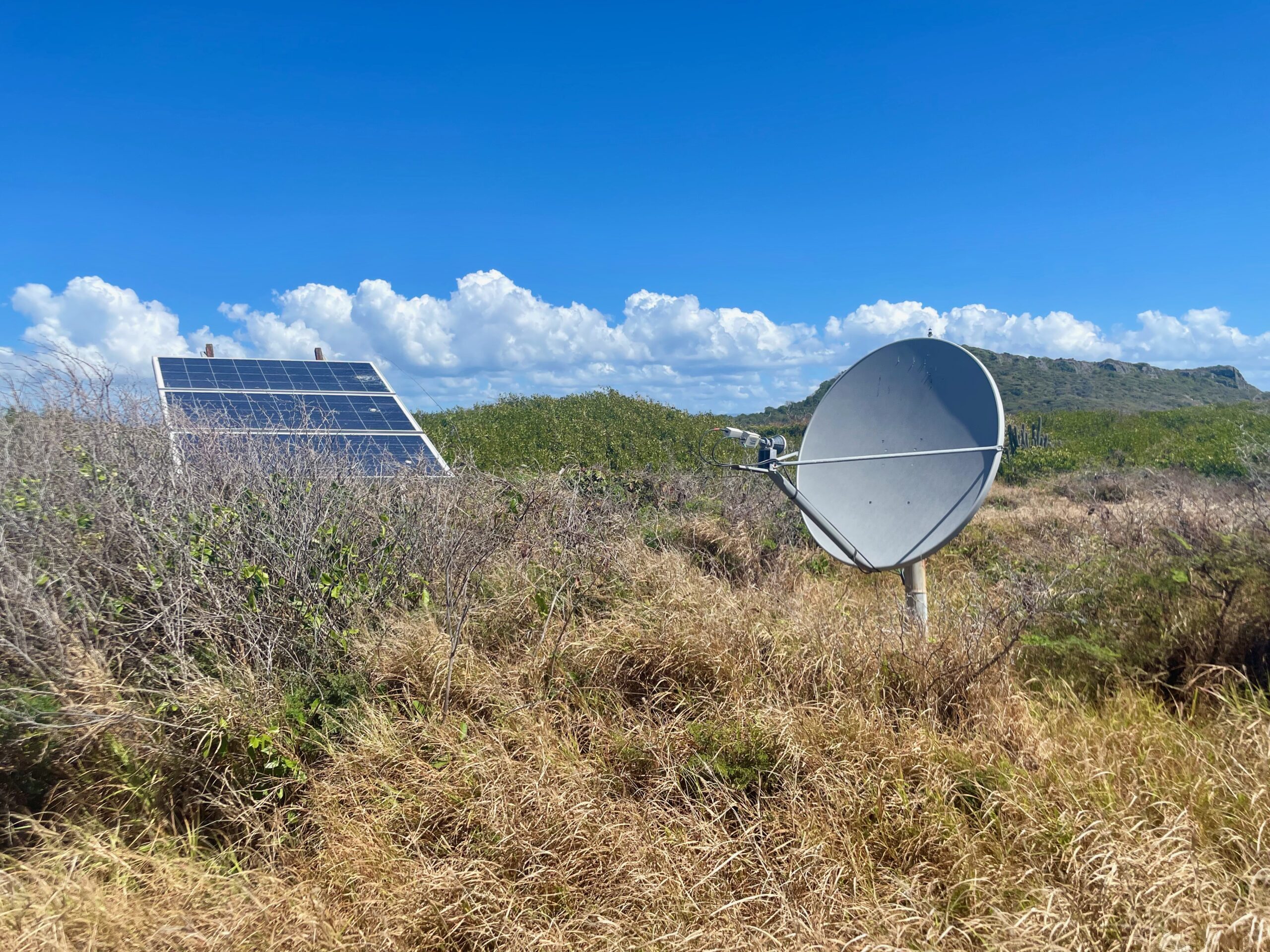


Our next stop is Balneario Caña Gorda, a beach within the renowned Guánica Dry Forest Reserve, a UNESCO-designated biosphere. Its crystal-clear waters, soft sand, and rich biodiversity have earned it the prestigious “Blue Flag” award. Just before sunset, we navigate into a narrow harbour, flanked by rocky hills and bisected by a coral reef that bars us from approaching the sandy shore.
We opt to stay in deeper waters rather than risk passing through the reef. The tide is high, and we could attempt it, but when the tide recedes, the drop will be significant. We could find ourselves stranded until the next high tide, and by then, we’ll need to be underway with the first rays of dawn. The beach beckons, and the reef acts as a perfect breakwater, ensuring calm waters near the shore. But at our current depth, the boat rocks steadily in the waves. If the wind were stronger, it would be far worse.
At sunrise, we set sail again, continuing westward. Our next anchorage awaits at the charming town of Boquerón.


On weekends, Boquerón’s central square, El Poblado, transforms into a grand festival of music, karaoke, and street food, all just steps from the picturesque beaches. If time allowed, I would linger—nearby nature reserves and trails promise days of exploration. But for now, I take note for future visits.
As night falls, people slowly gather in the square. Musicians tune their instruments, setting the rhythm for an evening of revelry.
On our way to Boquerón, we spotted a massive airship hovering motionless in the sky above the island. It remained in place all day, defying the wind. By evening, as darkness crept in, it still hadn’t moved an inch. At first, the captain and I joked about UFOs and mirages. But with sustained 20-knot winds filling our sails, it seemed impossible for such a massive object to remain stationary. At higher altitudes, the wind is even stronger—what kind of technology could hold it there?
Curious, we asked around. Over dinner, I attempted to inquire in my broken Spanish. The waitress wasn’t sure, only that “el globo” had been there for as long as she could remember. Then her manager, fluent in English, provided a more detailed answer. The airship is a surveillance balloon, monitoring the island’s borders for illegal immigration and drug trafficking. She sympathized with those fleeing their homelands, longing for a better life in Puerto Rico. But, as she put it, “Puerto Rico isn’t made of rubber—it can’t stretch indefinitely.” The balloon, she assured us, does its job well.
Her explanation was precise, her English impeccable, but as I listened, I couldn’t shake the feeling that our journey, with all its wonders, had led us to an invisible line dividing those free to roam and those bound by borders.
By the way, I highly recommend the restaurant—the food and the bar are truly excellent. It’s located a bit away from the central square, so we had to walk about 600 meters from the waterfront. As a result, it’s quiet here, making it a perfect spot for a peaceful outdoor dinner. It is situated on the ground floor of the Boho Beach Club.
I had to Google the airship because I just couldn’t believe someone would so literally bring Orwell’s and Bradbury’s fantasies to life. But it’s all true—the island is indeed under constant surveillance. This contraption can lift a ton of equipment (radars, cameras, etc.) to an altitude of over 4 km and operates around the clock, remaining stable and functional even in winds of up to 120 km/h. The border is locked tight. No pasarán!

